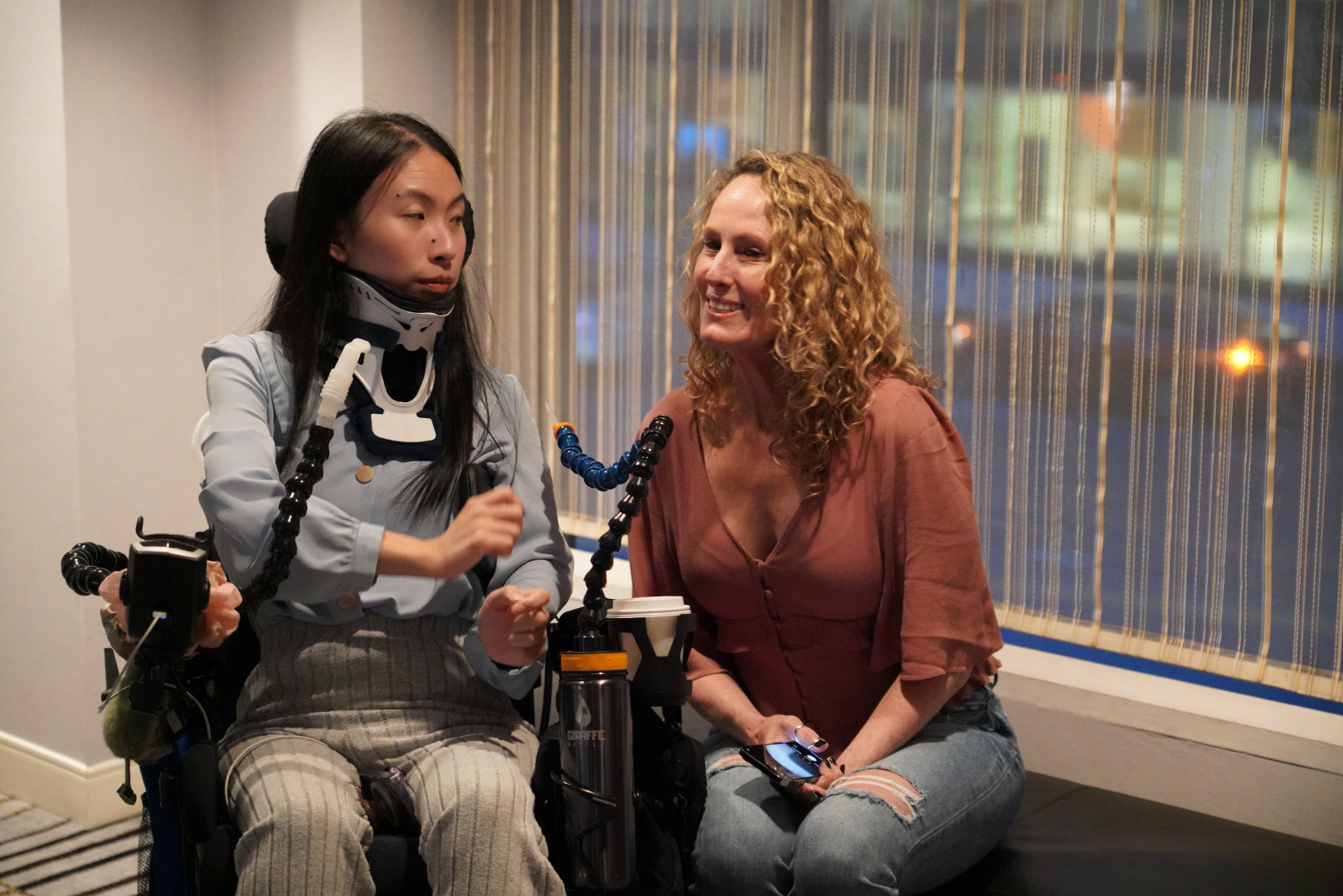
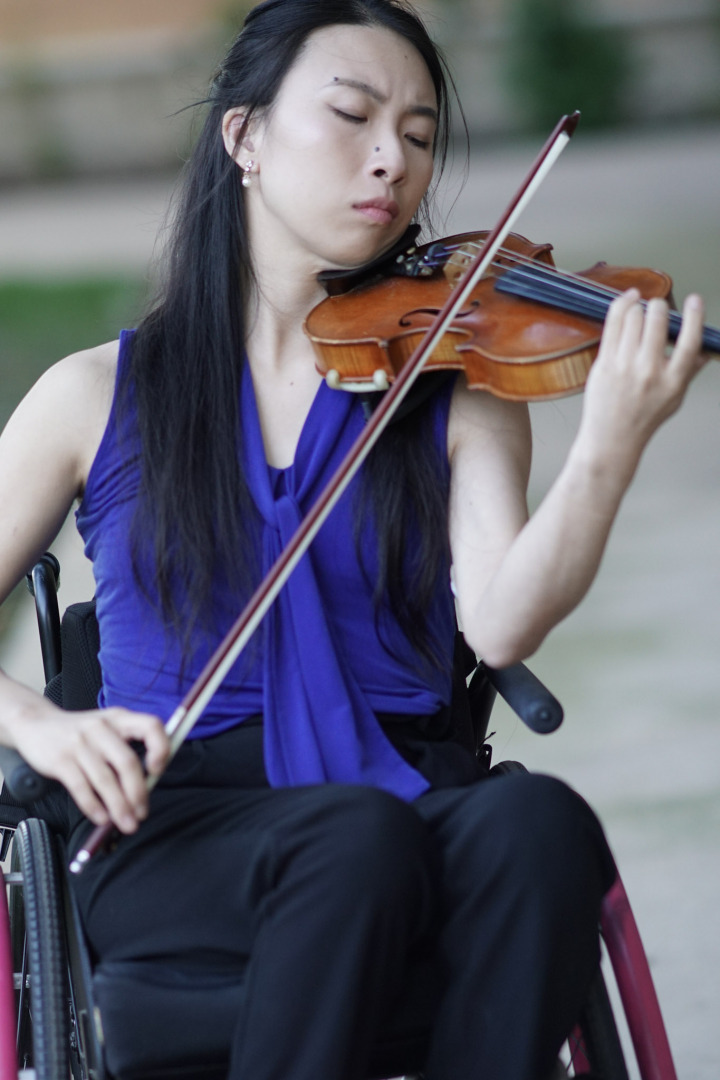
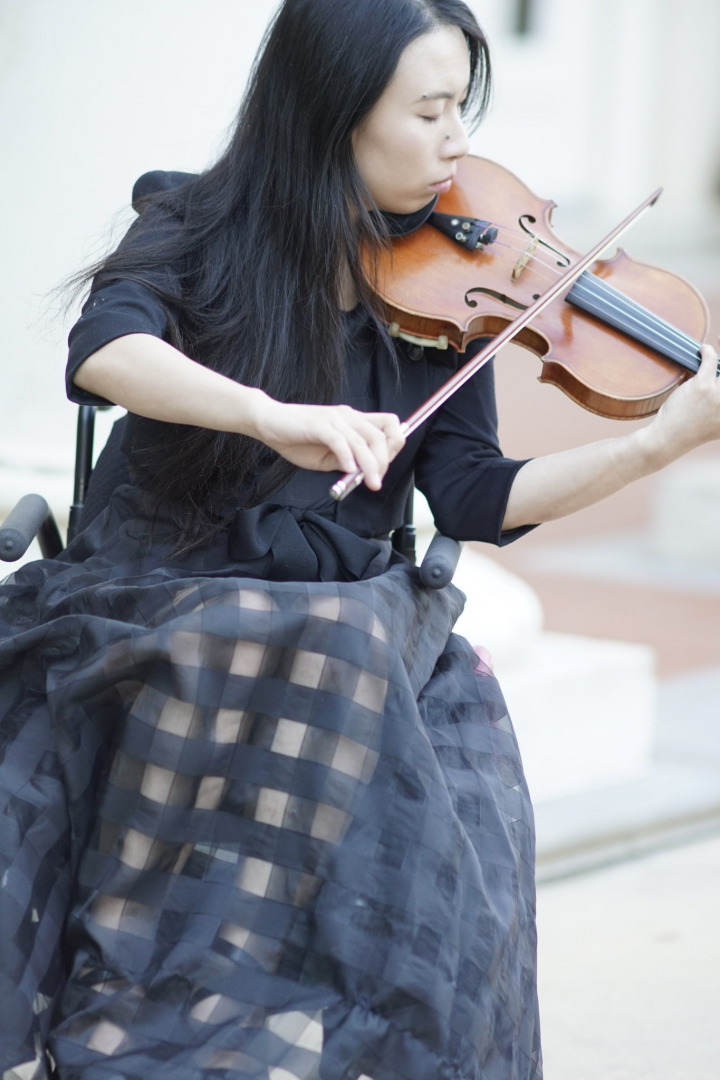
Meet Amy Wang-Hiller | Founder & Executive Director, InclusiVibe Foundation; Violinist & Educator



We had the good fortune of connecting with Amy Wang-Hiller and we’ve shared our conversation below.
Hi Amy, we’d love to hear more about how you thought about starting your own business?
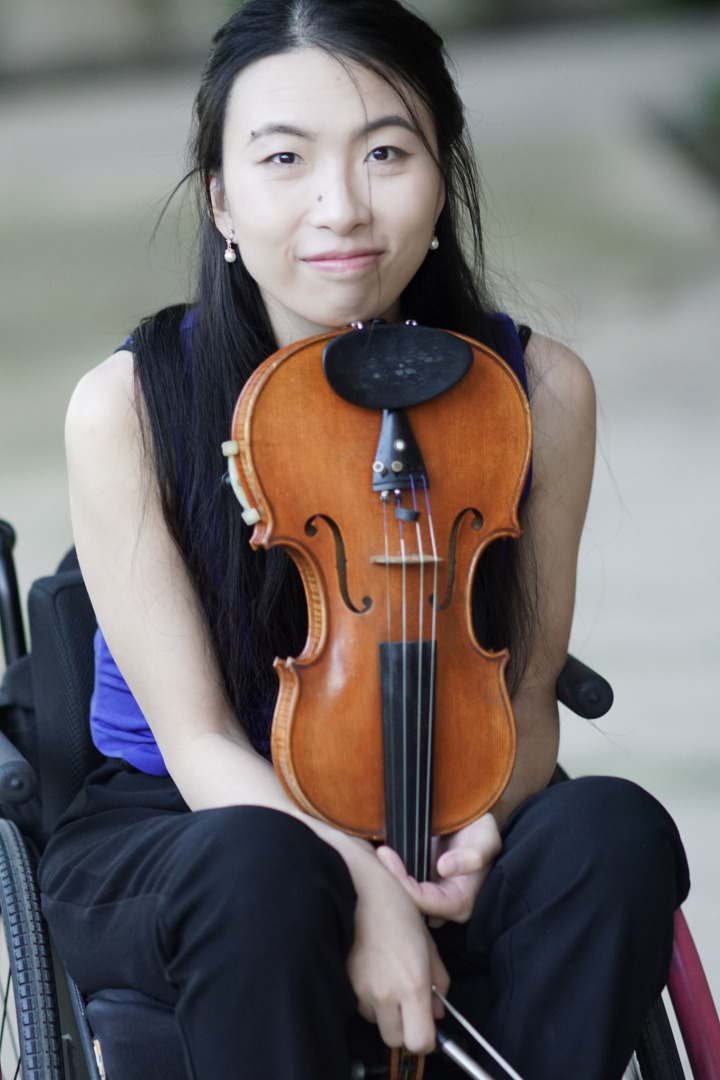
Well, how often do you see disabled musicians and non-disabled musicians on a classical music concert stage? Everyone I talked with was either ‘no’ or ‘never’. As a disabled musician, I grind my way on a stage against all non-wheelchair users. But last year, I lost it. As a patient, considered to be another “complex” patient, I felt fully understood in my own condition, but I experienced a 3-year diagnostic delay, feeling unheard. I had adapted so hard to my violin craft, and had a specialist who was able to help me play despite my quadriplegic diagnosis. I felt so alone as I fought to find the root cause of my battle. And I was fighting against the clock. Because I finally was seen and heard after seeing my surgeon across states, he was worried for my life after seeing how severe my CCI (craniocervical instability), AAI (C1-2 instability), along with the damage of cervical medullary syndrome from brainstem compression. That’s the unstable joint in the very top of my spine to my head, which flipped my life upside down since 2020. It is a miracle that I am still here today.
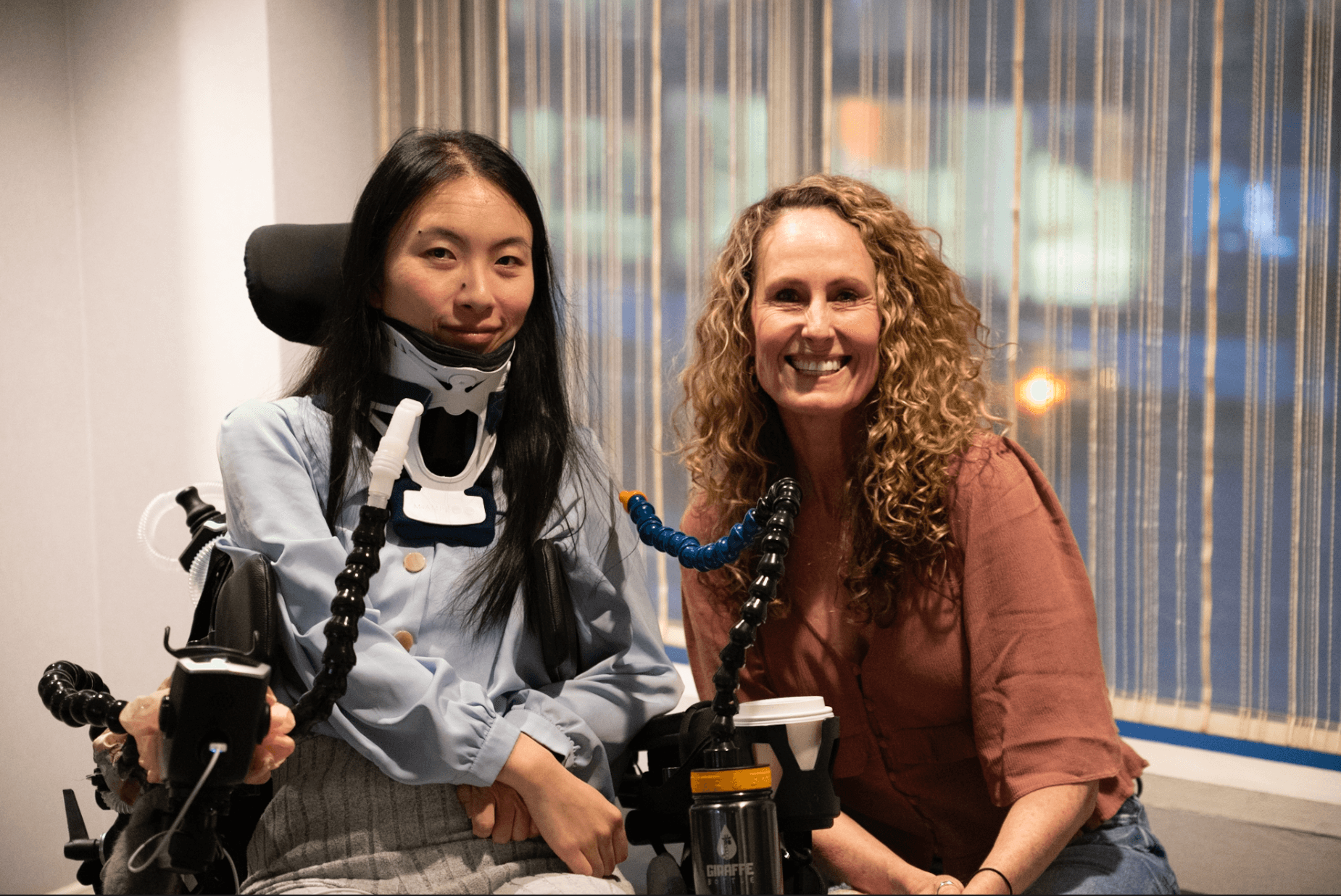
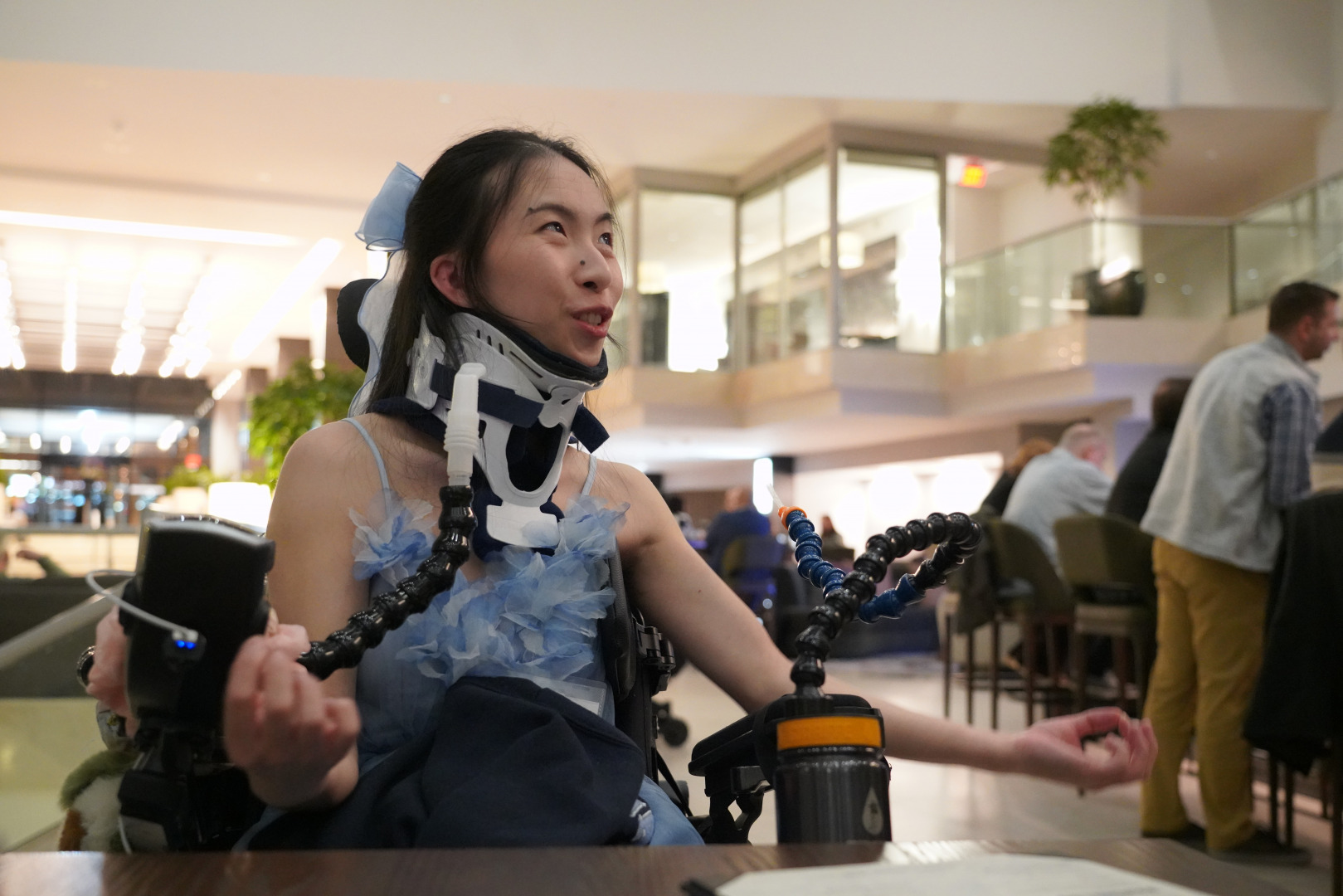
Last year, I ended up being dependent on a ventilator 24/7 after my fusion surgery right at the end of last August. It was evident that some vascular complications pushed me into the locked-in episodes (brainstem ischemic strokes can cause locked-in syndrome, except that I was able to come out of it every time the pressure was removed from the back of my occipital (brainstem area). But one of those compressions threw me into respiratory failure with loss of all movement from the neck down. The only reason the medical team didn’t pursue further investigation was that no additional change was detected on imaging. Despite some imaging before the surgeries and other testing, which align with all my other diagnoses, I am completely getting dismissed and gaslit with a completely absurd psychosomatic diagnosis, and I felt so alone and hopeless in that hospital. Similarly, when I got home, my music career was completely flipped upside down. I felt like I couldn’t be in any ensemble with oxygen and a ventilator. My performance career and school were on hold due to complications.
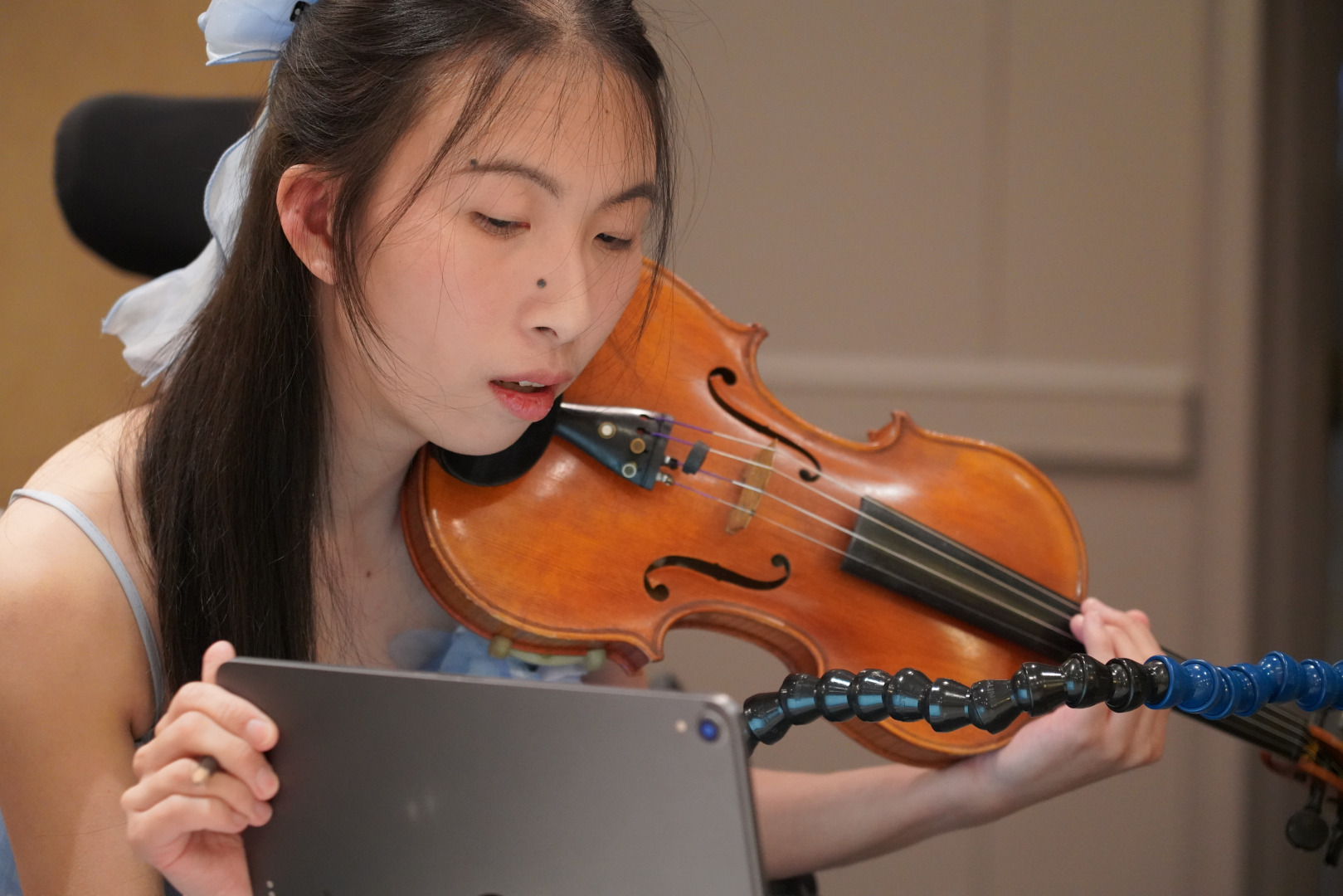
Now a year has passed, and many of my deficits still linger, but I still enjoy performing with adaptive playing. As traumatized as I could’ve been with each hospital trip and clinical visits, I still showed up for my only advocacy and educating others about my actual condition. Luckily, a few clinicians were able to advocate for my further care and diagnostic journey. I know this is not a sustainable approach for me, for other patients, for the neurology clinic to manage patients like mine, or for hospital staff to feel frustrated each time with how to handle or help these patients. Especially for patients to feel very alone and in disbelief of their own experience when they also got misdiagnosed. But we aren’t the problem. As my therapist says, “I want to change the healthcare system, but I don’t think we can.” Suddenly, one lightbulb went off in my head. What if we can’t change the system, but we change the people within it? What if we use music as the solution? Not only do we support those patients, but we also support disabled artists who feel the need for a community.
Instability doesn’t exclude people without EDS (Ehlers-Danlos Syndrome); Lately, several patients report sports injuries, infections, and concussions have been seen more among the CCI and AAI communities, too. Since my conversation last year with our cofounder, Susan Chalela, in D.C. during the Reeve Summit, a certified neuro PT in EDS and neuroplasticity, her tears and words, “I saw too many that have passed away in the state just like yours,” have lingered in my head. I finally understood why she was so passionate after I received one of the interview patients’ updates – a veterinarian’s lengthy text on the update of her CCI, and the scary moment she shared with me about how she could no longer feel her arms and couldn’t process whatever her partner had read to her. She is another case of delayed diagnosis because the physician didn’t believe her symptoms at the leading national hospital, and the final diagnosis was severe Craniocervical Instability after she saw the specialist, who specializes in patients with EDS and neuro complex conditions. Even after they have done surgeries for over ten years, the treatment of surgeries is not standardized enough for severe cases, and insurance still does not cover it. Too many problems arose due to the lack of research and coverage for these patients. Dozens, and sometimes up to over a hundred, fundraising events for the care of CCI patients are held online each day. Most of them, like the talented veterinarian, are still suffering, failing conservative treatment of PT, and need to raise the money for care, for treatment that we know would have a possibility in improving their quality of life.
So I thought of the initial interaction with our cofounder, Janice Shein, about a piece that honors the survival of my life from paralysis and diagnosis to the most recent respiratory failure, the grief, and the need for belonging. We started working hard since we reunited.
We all know the symptoms early on as the red flags, which often later become clear as one of those complex neurological disorders, particularly when we examine craniocervical instability. Many people in their 20s and 30s who develop such a debilitating condition are concerned, which drives more necessity in research, and they need to develop an early strategy to prevent daily damage to their spinal cord and brain stem, like I ended up with. They often do better and require less care and mobility needs. On the music side, lack of access to jobs around music, disabled artists forced to get off their professional identity and off their creativity, to force them to “quit”. InclusiVibe was my way of addressing both problems simultaneously—utilizing music as a platform for patient storytelling to understand their needs, and leveraging patient stories to inform medical awareness and ignite further research.
What should our readers know about your business?
Most importantly, we can advance research in areas such as brainstem compression as a nonprofit. The system is set up to protect the interests of the big corporations, making it too difficult for us to access care or treatment when the health problem becomes “complex”. When the diagnosis is still in its early stages, disagreements often occur among schools and among physicians. This is where InclusiVibe shines, alongside other leading physicians, patient advocates, and, especially, patient researchers. We see changes and further research in other rare disease communities being more widely recognized. But music not only helps raise awareness, it also helps bridge the things people don’t understand. We should be proud that we have numerous organizations dedicated to brain injury and spinal cord care. Still, we have never once focused on understanding more about the brainstem, especially not the brainstem compression that many individuals, like me, suffer from.
InclusiVibe Foundation will be a nonprofit that bridges music, medicine, and advocacy. What sets us apart is that we don’t treat music and media as just performance, and we don’t treat healthcare as clinical data – we bring them together. Through inclusive concerts and patient storytelling, we encourage research collaborations, and we create platforms where disabled musicians and patients are not only represented but also at the center. Our work is about demonstrating that music can transform healthcare narratives and that patient voices can shape culture, driving breakthroughs in research.
I’m most proud that InclusiVibe was built out of lived experience. As a disabled violinist, I faced years of dismissal in the medical system while also navigating barriers in the music world. It wasn’t easy. It took persistence, an understanding community, and a refusal to accept invisibility. I overcame those challenges by building partnerships—finding other patients, artists, and clinicians who shared my vision. That’s how InclusiVibe grew from an idea into an organization with concerts, a podcast, community panels, and partnerships with universities and medical institutions.
The lessons I’ve learned along the way are that passion without structure burns out, and structure without passion falls flat. You need both. Nonprofit work means accountability—budgets, bylaws, board meetings—but what sustains it is the passion of people who refuse to be silenced.
I am a patient who spent years being dismissed in the medical system, while also experiencing how disabled musicians are often naturally excluded from the arts. Those two worlds—healthcare and music—felt disconnected. But as a person with hEDS (hypermobile Ehlers-Danlos Syndrome), I know too well the power of connecting the dots. Where the disabled musicians and artists understand this group of complex neuro patients, we combine music and media to create an experience that leaves us with more compassion and humanity.
From the beginning, I knew it couldn’t just be a passion project. Passion without structure burns out quickly. I am establishing this as a nonprofit foundation, complete with bylaws, a board, budgets, and accountability measures. That structure enables our work to be fundable, sustainable, and scalable. And it’s all about nonprofit! Being a charitable organization creates work in multimedia, even when I am unable to participate; it will continue to evolve in helping this underresearched and overlooked community. We need to identify what needs to change in the system. It also shows funders and partners that we’re not just artists or advocates—we’re building systems of change.
In short, this was part survival, part strategy. Survival, because these issues touch my life and community every single day. Strategy, because I wanted to transform still-struggling stories or survival stories into impactful ones—concerts that raise awareness, grants that provide patients with access to care, and research collaborations that actually move the needle in medicine. That’s the heart of InclusiVibe. It started with me, but it belongs to a much larger community that funders, partners, and patients can all stand behind.
Let’s say your best friend was visiting the area and you wanted to show them the best time ever. Where would you take them? Give us a little itinerary – say it was a week long trip, where would you eat, drink, visit, hang out, etc.
Please visit on the day of our event, where we create and share stories. Day 1: I love a coffee and a pastry at West Oak Coffee Bar on the square after midday, and it’s really accessible. Then visit Recycled Books (a Denton classic) and some of the local shops. In the evening, we can have dinner at Barley & Board (a gastro pub with craft drinks), return to UNT, and enjoy a little live performance in the Voertman hall.
Day 2: time to visit the Dallas Arts District. Head into Dallas, grab brunch at Oddfellows in Bishop Arts. Then we can spend the entire afternoon exploring the Dallas Museum of Art and the Nasher Sculpture Center. Explore Deep Ellum street art murals, local record stores.
Dinner at my favorite spot, Twisted Root Burger Co., for their onion strings, and occasionally, I treat myself to one of their crazily good shakes.
Day 3 of Fort Worth Adventure: Start your morning with breakfast tacos at Velvet Taco before driving out to Fort Worth. Wander the Stockyards for that cowboy-meets-tourist energy — live country tunes spill out of bars even in the daytime. In the afternoon, the Modern Art Museum of Fort Worth is a gem: light-filled, beautifully designed, and usually less crowded than Dallas museums. Wrap the day at Joe T. Garcia’s, where Tex-Mex is served family-style in a leafy garden. If you’ve got the energy, end with some two-stepping at Billy Bob’s.
Day 4: Dallas Arts & Music: Although I don’t visit Dallas often, I love the matcha at Magnolias: Sous Le Pont (in the Harwood District) – wide entry, plenty of indoor/outdoor space, an artsy vibe. Accessibility is always a priority, but the food is also excellent, particularly their pastry, whichis phenomenal. Usually I don’t go for the first concert on Thursday, but to catch a Dallas Symphony Orchestra performance at the Meyerson, or if you’re in the mood for something more laid-back, there’s always jazz at The Balcony Club.
Day 5: Road Trip Adventure
Take a little road trip — about 1.5 hours north into Oklahoma if you have family and kids — to Turner Falls. Waterfalls and swimming – watching others enjoy it is also a great way to have a great reset day. On the way back, stop for barbecue in Gainesville.
Day 6: Dallas Low Energy Day
If you’re feeling up to it, consider brunch at the Fortune House for some soup dumplings. Afternoon choice: the Perot Museum (lots of elevators, easy navigation) or shopping at NorthPark, which is basically an art museum inside a mall. Dinner can swing fancy: Tei-An, a Japanese soba house in the Arts District, is both refined and deeply calming. Cap the night with rooftop drinks at HG Sply Co. — lively, accessible, and with great skyline views..
Day 7: Slow & Soulful
Morning coffee at Merit in Deep Ellum. Wander through the Meadows Museum (fully accessible, with a Spanish art focus) for a reflective close. Final dinner: Petra and the Beast, if you’re adventurous, or circle back to Deep Ellum for Asian street-style eats at Monkey King Noodle Co. End the night with jazz — maybe at the Balcony Club — to let the trip close on a soulful note
The Shoutout series is all about recognizing that our success and where we are in life is at least somewhat thanks to the efforts, support, mentorship, love and encouragement of others. So is there someone that you want to dedicate your shoutout to?
Absolutely. I wouldn’t be here without a community that believed in me long before I had the words or structure to launch this work. First, my family—especially my dad, who has always been encouraging but also points out major blind spots. Watching him navigate language barriers to discuss how he misdiagnosed and delayed care gave me the courage to keep pushing when my own body and voice were being doubted.
I also want to recognize the disabled patient community itself. Many of us first connected online, through support groups and my own social platforms, and those connections gave me proof that I wasn’t alone. Their stories didn’t just inspire InclusiVibe—they became its very foundation. I’ve seen firsthand the potential for music to be not only a learning experience but a transcendent one. One book I often return to is Musicophilia: Tales of Music and the Brain by Oliver Sacks. Nearly twenty years ago, Sacks was already writing that music is medicine, that it rewires the brain, and that making music is one of the strongest forces we have for movement, recovery, and human connection. What we’re doing at InclusiVibe builds on that legacy and brings it into practice.
On the professional side, I’ve been fortunate to have mentors in both music and medicine who encouraged me to combine those worlds rather than choose between them. Composer friend Janice Shein has guided me in many ways on how this organization would be, and clinicians like Dr. Halverson and Dr. Klinge, who are willing to step into conversations that many in medicine avoid. They’ve each helped validate that bridging music and healthcare is not only possible, but necessary. I also want to express my appreciation for having a supportive orchestral community in Shreveport, South Arkansas, and for the several local symphony orchestras with which I have had the pleasure of performing.
And finally, I would like to extend my gratitude to the local EDS support group. From my UNT professors to grassroots advocates, their willingness to take early chances on my vision gave me credibility and personal help when I had little more than a violin and a story. Since InclusiVibe is not just my work, it is the continuation of theirs.
Website: https://inclusivibe.org
Instagram: http://www.instagram.com/inclusivibe_foundation
Linkedin: http://www.linkedin.com/company/inclusivibe-foundation
Facebook: InclusiVibe Foundation
Yelp: http://www.linkedin.com/inclusivibe-foundation
Youtube: http://www.youtube.com/@inclusivibe